
Moving to Taiwan // The 2026 Expat’s Guide to Life in Taipei
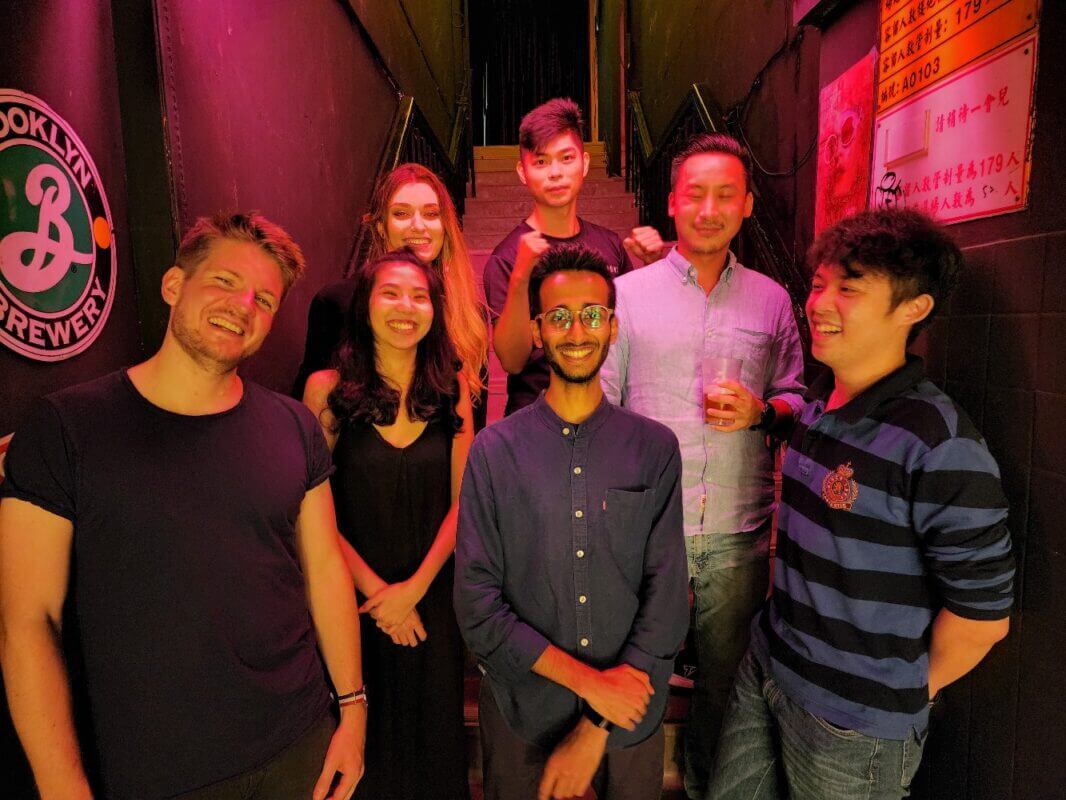
Moving anywhere in the world can be both an exciting, and daunting task.
Moving to Taiwan starts with the right visa. US passport holders can enter visa-free for up to 90 days, but a longer stay needs a study, work or Employment Gold Card route plus an Alien Resident Certificate (ARC).
Taipei is safe, easy to get around on the MRT and cheaper than most big US cities, though central rents add up. Expect hot, humid summers, a July to September typhoon season and Traditional Chinese characters everywhere.
Depending on where you’re coming from, moving to Taipei may create a big distance between you and your hometown.
So, we’ve put a guide together including key information and facts on what to expect regarding the most important things that may be on your mind when preparing for a move abroad!
Let’s get stuck in…
Moving to Taipei || Moving to Taipei: A Quick Introduction to Taipei
Moving to Taipei || Visas for Moving to Taiwan // Which One Do You Need?
Moving to Taipei || Residency, Health Insurance and Tax // The Admin After You Land
Moving to Taipei || Moving to Taipei: Currency
Moving to Taipei || Cost of Living in Taipei // What a Month Really Costs
Moving to Taipei || Finding an Apartment in Taipei
Moving to Taipei || Taipei, Taichung or Kaohsiung?
Moving to Taipei || Moving to Taipei: Timezone
Moving to Taipei || Moving to Taipei: Weather
Moving to Taipei || Moving to Taipei: Language
Moving to Taipei || Is It Easy for an American to Live in Taiwan?
Moving to Taipei || Your Moving to Taiwan Checklist
Moving to Taipei || FAQs

Moving to Taipei: A Quick Introduction to Taipei
Taipei has a population of about 2.4 million and sits in a mountain-ringed basin at the northern end of Taiwan.
Taipei is a unique city that blends modern skyscrapers with traditional temples and night markets.
Taipei is also one of the safest cities our students have ever lived in. The US State Department rates Taiwan at its lowest advisory level (Level 1: exercise normal precautions) and notes minimal street crime and rare violent crime. Walking home from a night market late in the evening is a normal part of life here.
Surrounded by mountains, Taipei offers a mix of urban energy and natural beauty, with easy access to hiking trails and hot springs. It is known for its excellent public transportation, thriving tech industry, and rich cultural scene, including landmarks like Taipei 101 and the National Palace Museum.
Speaking of Taipei 101, the tower is home to a Starbucks partway up, with a great view over Taipei city.
As for the weather, Taipei has a humid subtropical climate, with very hot, rainy summers and mild winters. Luckily, most of the city is designed to keep walkways covered, providing you with some much-needed shelter from both the sun and rain as you’re exploring the city.
The city is smaller than sprawling megacities like Tokyo or London, and you can get from one side of Taipei to the other in about half an hour on the MRT (捷運 jiéyùn), Taipei’s metro system.
TIP💡 Pick up an EasyCard (悠遊卡 yōuyóukǎ) at any MRT station or convenience store on your first day. It works on the MRT, city buses and YouBike shared bikes, and you can even pay with it at 7-Eleven. Just remember that eating and drinking, even water or gum, is banned inside MRT stations and on trains.
Plenty of long-term residents eventually swap the MRT for two wheels. If that’s you, read our guide to getting a scooter license before you rent one.
NOTE – LTL’s school is based in Da’an District, in central Taipei and close to both the blue and red lines.


Building Your Expat Life in China and Coping With People Moving Home || Part 1
Find out first how to make your expat life in China easier from the start, and how to deal with your friends moving home with LTL Language School.
Visas for Moving to Taiwan // Which One Do You Need?
Your visa is the first thing to sort out. It decides how long you can stay, whether you can work and when you can join the health system.
| Route | Who it suits | Can you work? |
|---|---|---|
| Visa-free entry | Short visits and scouting trips (US passports: up to 90 days) | No |
| Visitor visa for Mandarin study | Students enrolled at an approved Mandarin center | Not at first |
| Resident visa and ARC | Long-term students, employees and family members | Depends on your permit |
| Work visa | People with a job offer from a local employer | Yes, for that employer |
| Employment Gold Card | Qualified professionals, freelancers and founders | Yes, for any employer |
| Working holiday visa | Younger travelers from partner countries | Yes, temporary jobs |
Visa-free entry for Americans
With a US passport you can enter visa-free for up to 90 days. Your passport must be valid for your whole stay (many other nationalities need six months’ validity), and officers can ask to see an onward or return ticket. Before you fly, fill in the free online Taiwan Arrival Card at twac.immigration.gov.tw.
Two catches matter if you’re planning a move. You can’t work on a visa-free entry, and for US passport holders the 90 days can’t be extended or changed to another status once you’re here. That includes study: if you want to stay longer than 90 days to learn Mandarin, arrive on the right visa.
Studying Mandarin: visitor visa first, then residency
Studying Mandarin on a visitor visa is the route most of our long-term students take. Once you’re enrolled at an approved Mandarin center, your admission letter supports an application for a visitor visa for Mandarin study at a Taipei Economic and Cultural Office (TECO) before you travel. It’s usually issued for 60 or 90 days and can be extended.
After four months of study, and as long as you stay enrolled for at least three more, you can apply for residence for the same purpose without leaving. The National Immigration Agency asks for at least 15 hours of classes a week, Monday to Friday, and you can’t miss more than a quarter of your class hours. Residence for Mandarin study can run for up to two years in total.
TIP💡 Plan your course length around these rules. If you already know you want to stay for a year, book enough 15-hour-a-week classes to cover at least seven months from the start, so you can switch to residency smoothly.
Work visas and the Employment Gold Card
If a local employer hires you, they apply for your work permit, and you then get a resident visa and ARC tied to that job.
The Employment Gold Card works differently. It combines an open work permit, resident visa, ARC and re-entry permit in one card, so you can work for any employer, change jobs, freelance or start a business without a sponsor. It’s for qualified professionals in one of twelve professional fields, such as science and technology, the economy, education, culture and arts, finance and architecture, and you apply online through the official Taiwan Gold Card website. It’s the route many freelancers and remote workers in Taipei look into first.
Working holiday visas
Taiwan runs working holiday schemes with a list of partner countries, including the UK, Australia, New Zealand, Canada and several European countries. They’re aimed at younger travelers, generally aged 18 to 30 (up to 35 for some nationalities), and let you take temporary jobs to fund a longer stay. US passports aren’t on the partner list at the moment, so check the Bureau of Consular Affairs list to see whether your passport qualifies.
Documents to prepare
- A valid passport that meets the validity rule for your nationality
- The online visa application form and recent passport-style photos
- Your school admission letter or employment documents
- Proof of funds, such as recent bank statements
- A return or onward ticket for visitor visas
- A health examination certificate if you switch from a visitor visa to residence inside Taiwan
- For some resident visa categories, a police record certificate (an FBI background check for Americans) authenticated by a TECO office
Documents that aren’t in Chinese or English need a translation, and both versions must be authenticated by a TECO office.
Residency, Health Insurance and Tax // The Admin After You Land
What is an ARC?
The Alien Resident Certificate (ARC, 居留證 jūliúzhèng) is your residency ID card. It shows your status and how long you can stay, and you’ll be asked for it when you sign a lease, open a bank account, get a phone contract or join the health system.
If you enter on a resident visa, apply to the National Immigration Agency (NIA) within 30 days, counting from the day after you arrive. Your school or employer may set an earlier internal deadline, so check with them. Students apply through the NIA’s online system, processing takes around 10 working days, and the standard fee is NT$1,000 per year of validity. Apply for a re-entry permit at the same time, so you can leave and come back without losing your residency.
National Health Insurance (NHI)
The National Health Insurance (NHI) system is one of the best things about living in Taipei, and foreign residents with an ARC can join it. When you’re covered depends on your situation:
- If you’re legally employed with a work permit, you’re enrolled from your first day of work.
- Students, freelancers and other ARC holders join after six months of residence. You can leave once for up to 30 days, but those days don’t count toward the six months.
- Dependents of employed foreign professionals can enroll from the day they receive their ARC.
For students, the premium is currently around NT$826 a month. Until your cover starts, keep private health or travel insurance for your first months.
Tax for foreign residents
Taiwan taxes you based on how many days you spend here in a calendar year. Stay 183 days or more and you’re a tax resident: you file an annual return each May and pay progressive rates from 5% to 40%. Stay less and salary from a local employer is generally withheld at a flat 18%. US citizens still file with the IRS too, so talk to a tax adviser if you’ll earn income here.
Staying long term
After five years of continuous legal residence, living here more than 183 days in each of those years, you can apply for an Alien Permanent Resident Certificate (APRC). Time spent here on a student residence permit generally doesn’t count toward those years. Gold Card holders and some other professionals can qualify sooner.
Moving to Taipei: Currency
Currency: New Taiwan Dollar (NTD).
1 USD = approx 32.5 NTD (late October 2026)

The currency name is the “New Taiwan Dollar“, NTD or NT$ in its shortened form.
The ISO code of the currency is TWD, which you will need for the currency rate online.
To refer to money in everyday conversation, local people use the word ‘kuai’, literally meaning ‘piece’.
Written down, that’s 塊 (kuài). On price tags, receipts and bank forms you’ll see the more formal 元 (yuán), so 100元 and 100塊 mean the same thing: a hundred dollars.
The highest denomination in cash is $2000 and the lowest is $100 although coins go as low as just $1.
Useful Conversions (USD, true as of late October 2026)
| Cost/Currency | USD |
|---|---|
| 1 NTD | 0.031 |
| 50 NTD | 1.54 |
| 250 NTD | 7.68 |
| 1,000 NTD | 30.72 |

Dragon Boat Festival in Taipei || The Complete Guide 🐉
The Dragon Boat Festival 端午节 (duān wǔ jié), also called Double Fifth Festival, is celebrated on the fifth day of May of the lunar calendar.
Cost of Living in Taipei // What a Month Really Costs
Taipei costs less than most big US cities, but rent in the central districts adds up quickly. Here are rough monthly ranges for one person, converted at about 32.5 NTD to the dollar.
| Expense | Typical monthly cost (NT$) | About (US$) |
|---|---|---|
| Room in a shared apartment | 12,000 to 20,000 | 370 to 615 |
| Studio apartment | 18,000 to 30,000 | 555 to 925 |
| Food (local eateries plus some cooking) | 9,000 to 15,000 | 275 to 460 |
| Transport (monthly TPASS for MRT and buses) | 1,200 | 37 |
| Phone plan with unlimited data | 500 to 1,000 | 15 to 30 |
| Utilities (higher in summer with air conditioning) | 1,000 to 3,000 | 30 to 90 |
Is US$1,000 a lot in Taipei?
US$1,000 is about NT$32,500. For a student sharing an apartment and eating like a local, that’s a tight but workable monthly budget in Taipei, and it goes noticeably further in Taichung or Kaohsiung.
If you want your own studio in a central district, plus eating out and weekend trips, plan on something closer to US$1,500 to US$2,000 a month. Course fees come on top of that.
How much should you save before you move?
Aim to arrive with at least US$3,000 to US$5,000 beyond your flights and course fees. That covers a rental deposit (up to two months’ rent) and your first month’s rent, your ARC fee, a phone plan, basics for your apartment and private insurance until NHI starts, with a buffer for your first two to three months.
Finding an Apartment in Taipei
Most newcomers settle in or near Da’an District, where our school sits a few minutes’ walk from Xinyi Anhe MRT station. Xinyi, Zhongshan and Songshan are also popular. For lower rents, look across the river in New Taipei areas such as Yonghe, Zhonghe and Banqiao, which are still a short MRT ride from the center.
Apartments are mostly listed on 591 (591.com.tw) and in expat housing groups on Facebook, and many landlords prefer one-year leases. Expect to pay a deposit (押金 yājīn) of up to two months’ rent, plus your first month up front. Always view the place in person, check the air conditioning and ask how electricity is billed.
If you’d rather not apartment-hunt from abroad, LTL can arrange homestays with carefully selected host families, shared apartments and studios for your first months while you get to know the city.
| Chinese | Pinyin | Meaning |
|---|---|---|
| 押金 | yājīn | Deposit |
| 房東 | fángdōng | Landlord |
| 租約 | zūyuē | Lease |
| 套房 | tàofáng | Studio with a private bathroom |
| 雅房 | yǎfáng | Room with a shared bathroom |
Taipei, Taichung or Kaohsiung?
Most people moving for study or work start in Taipei, but it’s worth knowing how the other big cities compare.
| City | Best for | Weather | Cost |
|---|---|---|---|
| Taipei | The biggest international community, the most jobs, the best MRT network and nightlife | Rainy, hot summers and cool, damp winters | Highest rents |
| Taichung | A relaxed pace, shopping and easy trips into the mountains | Sunnier and drier than Taipei | Rent noticeably cheaper than Taipei |
| Kaohsiung | Coastal living, a laid-back port-city feel, MRT and light rail | The hottest and sunniest of the three | Rent noticeably cheaper than Taipei |
We think Taipei is the best place to start if you want to become fluent as fast as possible, because daily classes and city life push you to use Mandarin all day. If the south appeals, you can also learn Chinese in Kaohsiung.
Moving to Taipei: Timezone
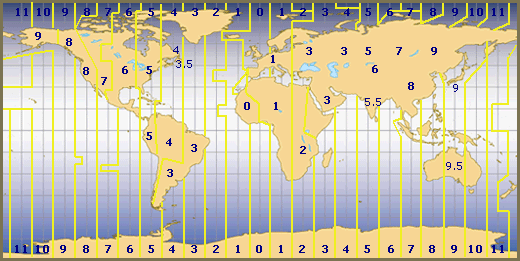
Taipei is on GMT+8 and doesn’t use daylight saving time. That puts it 13 hours ahead of New York in winter (12 hours during US daylight saving time) and 16 hours ahead of Los Angeles (15 in summer).
Moving to Taipei: Weather
Taipei has a humid subtropical climate, so you can leave the heavy winter coat at home.
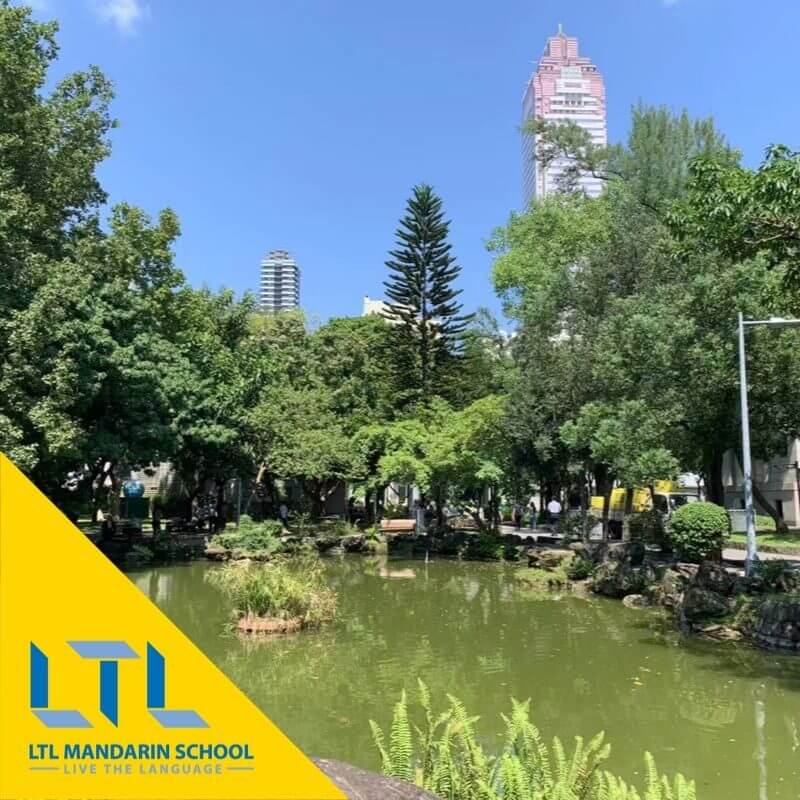
Taipei has a beautiful warm climate throughout the whole year although experiencing Taipei weather in summer can be a tad too much, as humidity levels, as well as heat rise above comfortable for most.
Winters are mild but damp, and most apartments have no central heating, so pack a light jacket and a sweater or two. And don’t forget an umbrella!
Taipei’s weather can be very unpredictable, especially during typhoon season between July and September.
One minute a downpour, the next beautiful blue skies.
The average amount of rainfall per year is 2,500mm and there are about 3-4 typhoons that hit the island per year.
Such typhoons have been known to have devastating impact, such as flooding, landslides, and causing damage to infrastructure.
Because Taipei sits in a basin ringed by mountains, summer heat and humidity can feel trapped in the city. Air conditioning, a dehumidifier for your apartment and an afternoon escape up to Yangmingshan help a lot.
Taipei Temperature:
- Annual average – 22 °C
- Annual average lowest – 12 to 17 °C
- Spring average – 25 °C
- Summer average – 30 °C
- Autumn average – 20 °C
- Winter average – 16 °C

Moving to Taipei: Language

People in Taipei write in Traditional Chinese characters rather than Simplified, and there are several other differences between Taipei Mandarin and Beijing Mandarin, from everyday vocabulary to accent.
TIP💡 Start before you fly. Get comfortable with the sounds and tones using pinyin, and learn a handful of Traditional characters you’ll see everywhere, like 捷運 (MRT), 出口 (exit) and 廁所 (restroom). Your first week will feel far less overwhelming.
Once you’re here, immersion does the heavy lifting. Ordering food, paying at the counter and asking directions every day is how Mandarin finally sticks. It’s hard work, but very doable with daily classes, and if you want a certificate to show for it, the TOCFL is the exam most learners take in Taipei.
You’ll also spot Zhuyin (ㄅㄆㄇㄈ), the phonetic system used in Taipei, on children’s books and phone keyboards. You don’t need it to get started, but plenty of our students pick it up along the way.
| Chinese | Pinyin | Meaning |
|---|---|---|
| 你好 | nǐ hǎo | Hello |
| 謝謝 | xièxie | Thank you |
| 多少錢? | duōshǎo qián? | How much is it? |
| 我要這個 | wǒ yào zhège | I’d like this one |
| 捷運站在哪裡? | jiéyùn zhàn zài nǎlǐ? | Where’s the MRT station? |
| 出口 | chūkǒu | Exit |
You can check out our blog all about Taiwanese Mandarin and get yourself fully clued up!
At LTL – our classes in Taipei are either taught using Traditional Chinese or Simplified Chinese.
Sign up and YOU have the power to choose what you want to learn.
We also have kids and teens covered with our Taipei Summer Camp and Taipei Winter Camp – where 7-17 year olds can study Chinese in the mornings and take part in cultural activities in the afternoons!
Things You Have To Know About Taiwanese Mandarin
What is the difference between Taiwanese Mandarin and Standard Mandarin? What language do they speak in Taiwan? Your questions are all answered here.
A note on VPNs
If you’ve studied with us in Beijing or Shanghai, you’ll know a VPN is essential there, whether free or paid.
In Taipei, you won’t need one. Facebook, Instagram, Google, WhatsApp and Netflix all work normally, and fast mobile data is easy to find.
So, surf away!
Things to do in Taipei
Luckily for you, Taipei is packed with things to do!
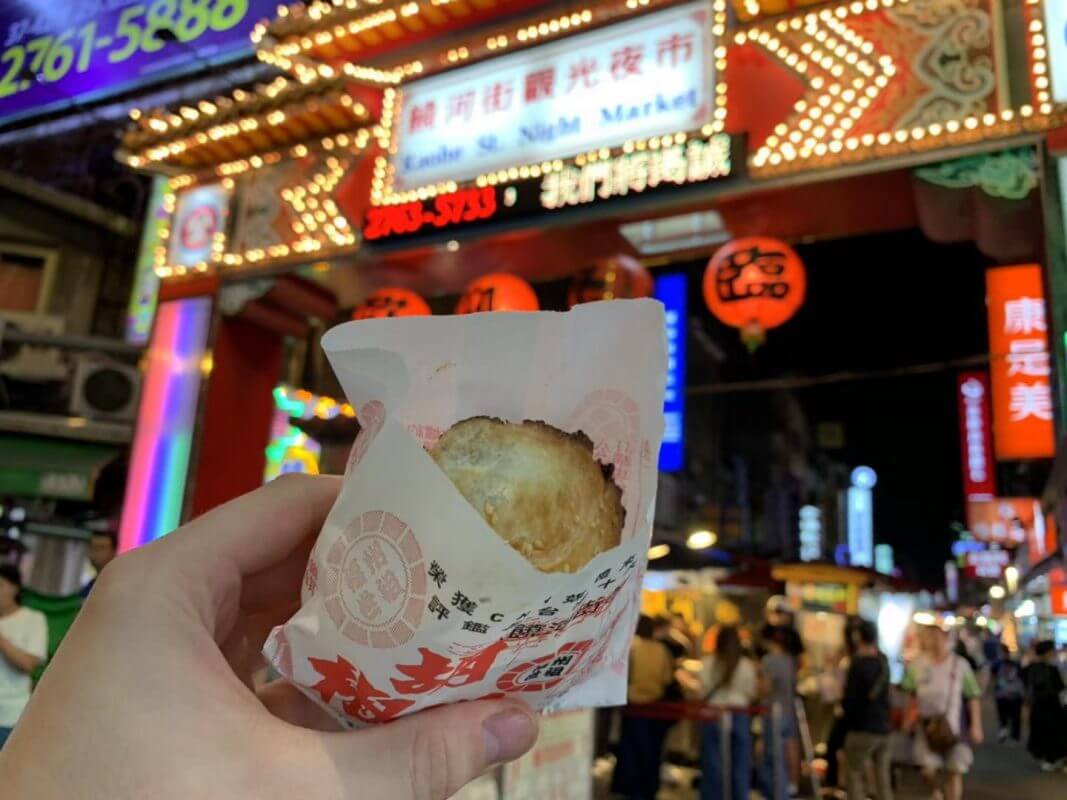
Even better still… we have dedicated not one, but two posts towards things to do in Taipei!
Our first post is about the top things to do in Taipei – the things on the bucket list you have to do. These include:
- Visit the Taipei 101
- Head to the Addiction Aquatic Development
- Visit the incredible night Markets
Check out our post to see the rest.

Over 20 Things to Do in Taipei | The Complete Guide
This is a must-visit city. Taipei is incredibly relaxed, very friendly, and boasts some rather incredible food across the city.
Our next post is about the quirkier, fun things to do in Taipei that usually slip under the radar. These include:
- Going for a knife massage
- Have your fortune told by a bird
- Sitting on a giant waterlily
See how those lists differ. We didn’t even mention the poo-themed restaurant either!
Something for everyone in Taipei!
Is It Easy for an American to Live in Taiwan?
Day to day, living in Taiwan as an American is mostly easy. Taipei’s MRT signs and announcements are in English, convenience stores are open around the clock on almost every corner, the streets are safe and healthcare is affordable. Even the power sockets are the same as in the US (110V, two-pin plugs), so your chargers work straight away.
The harder parts are admin and distance. Forms, leases and bank paperwork are often only in Chinese, and outside the central districts many landlords and clinic staff speak little English. Most banks will also ask for your ARC before opening an account. A little Mandarin goes a long way here, and locals really appreciate the effort.
Settling in and homesickness
The first few months are when homesickness tends to hit, usually once the novelty wears off. Language exchanges, hiking groups and classmates from all over the world make it much easier to build a circle quickly. Our tips for beating homesickness abroad can help too.
Moving solo or with family
Moving solo is the most flexible option: a shared apartment or homestay keeps costs down and gets you speaking Mandarin from day one. Moving with a family means planning for a larger apartment, school places (Taipei’s international schools have limited spaces and high fees) and dependent visas. Dependents of employed foreign professionals can join NHI as soon as they get their ARC.
Your Moving to Taiwan Checklist
Three months or more before you go
- Choose your visa route and book your course or confirm your job offer.
- Gather your documents, and request any police record certificate early, as these can take weeks.
- If you’re bringing a dog or cat, start now. Taiwan’s rules include a microchip, rabies vaccination, a rabies blood test and quarantine on arrival, and the paperwork can take six months or more. Check the current requirements with Taiwan’s Animal and Plant Health Inspection Agency before booking flights.
- Decide what to ship. Most of our students arrive with two suitcases and buy the rest locally, while sea freight for boxes can take several weeks.
One month before
- Book your first few weeks of accommodation.
- Buy private health or travel insurance to cover you until NHI starts.
- Tell your bank you’re moving and check your cards work abroad.
- Fill in the online Taiwan Arrival Card in the days before your flight.
Your first week in Taipei
- Buy a SIM card or eSIM at the airport counters at Taoyuan, or at a telecom store in the city.
- Get your EasyCard for the MRT, buses and YouBike.
- Start your ARC application if you arrived on a resident visa.
Your first month
- Collect your ARC and open a bank account.
- Pay your phone and utility bills at any 7-Eleven or FamilyMart counter.
- Learn the local garbage routine: in Taipei, household rubbish goes in official city garbage bags, and you hand it straight to the garbage truck.
- Note the date you become eligible for NHI and enroll as soon as you can.
Moving to Taipei || FAQs
What is the weather like in Taipei?
Warm, humid and wet. The annual average is 22 °C and temperatures rarely go below 12 °C and above 35 °C.
What currency is used in Taipei?
In Taipei the NTD is used. This is the New Taiwan Dollar and converts roughly to 1 USD = approx 32.5 NTD (late October 2026).
What is the population of Taipei?
Taipei City has a population of about 2.4 million people (2,424,159 in July 2026, according to the city’s Department of Civil Affairs). Greater Taipei, including New Taipei City, is home to more than 6 million.
Where can I take Chinese classes in Taiwan?
You can study Chinese in Taipei at our campus in Da’an District, a few minutes’ walk from Xinyi Anhe MRT station, and you can also learn Chinese in Kaohsiung. Classes are available in either Traditional or Simplified characters.
Is 1000 USD a lot in Taiwan?
US$1,000 is about NT$32,500. For a student sharing an apartment and eating at local eateries, that is a tight but workable monthly budget in Taipei.
The same amount goes noticeably further in Taichung or Kaohsiung. If you want your own central studio, eating out and weekend trips in Taipei, plan on closer to US$1,500 to US$2,000 a month, with course fees on top.
Can a US citizen become a Taiwan citizen?
Yes, but it is a long process. Most foreigners first build years of continuous legal residence, and after five years (living in Taiwan at least 183 days each year) they can apply for an Alien Permanent Resident Certificate (APRC).
Naturalization generally also requires giving up your original nationality, though some high-level professionals are exempt. Many Americans settle for permanent residency instead, which lets them live and work in Taiwan long term.
Want more from LTL?
If you wish to hear more from LTL Language School why not join our mailing list.
We give plenty of handy information on learning Chinese, useful apps to learn the language and everything going on at our LTL schools!
Sign up below and become part of our ever growing community!
BONUS | Want to study the local Taiwanese dialect known as Hokkien? We provide Hokkien classes in person and online.
⭐ Download our free ebook, your starter pack of essential Mandarin learning resources!








7 comments
[…] you’re planning to visit Taiwan as a tourist, or coming to live, work, or study, don’t forget to head back to its roots and include checking out the Taiwan […]
[…] turn, this means that it has an incredibly unique culture. This is why you should definitely put a visit to Taiwan on your bucket list. It is a place like no other. Plus, it’s a great place to study Mandarin […]
[…] Taiwan flag is the flag of the Republic of China (Taiwan). It is a great source of pride for many Taiwanese people and can often be seen around the country. […]
I miss TW, spent 3 amazing years there. Would love to go back
Taiwan would welcome you back with open arms Hattie!
Best placed I ever lived!
It's right up there! Always top of those expat ranking lists.